
Clarke Projected Release Date Meaning
A projected, tentative, or scheduled date is an agency calculation based on information available at that time. It is not proof that the person left custody. The value can change before the day arrives, and another authority may take custody when the first sentence ends. Use the field label exactly as NRADC or VADOC presents it. Calling an estimate an “actual release date” creates a false timeline.
Actual release is a completed event. Strong proof includes a jail or DOC release entry, a signed release order or letter, an agency-reported custody event, or a court order corroborated by the custodian. The court supplies legal authority. The jail or VADOC supplies the physical departure record. If those sources conflict, keep both dates and ask the issuing offices to explain the difference.
Clarke Release Date Custody Paths
A Clarke County pretrial detainee at NRADC usually has no computed sentence-release date. The case may turn on a bond decision, satisfaction of conditions, dismissal, plea, trial, sentencing, or another hold. Check the correct Clarke court and ask NRADC about the person’s current custody status. A bond amount or hearing date does not guarantee a departure time.
A person serving a local or regional jail sentence may have a date derived from the court order, credit for time already held, and applicable jail rules. The court clerk can supply the judgment and jail-credit order. NRADC maintains its custody and release entry. When a person has been committed to VADOC, the state time-computation record and locator become the proper route. A move from NRADC to VADOC is a transfer, not release into the community.
| Status | Date source | What to verify |
|---|---|---|
| Pretrial at NRADC | Clarke court and current jail status | Bond, conditions, other holds, and actual departure |
| Regional-jail sentence | Court judgment, jail credit, and NRADC record | Sentence end, credits, and any transfer |
| VADOC sentence | VADOC locator and time computation | Exact projected field, credit regime, and completed status |
| Parole-eligible term | Parole Board decision plus VADOC | Grant date is distinct from physical release |
Always identify the sentence and custodian before comparing dates. One person can have several cases, and one sentence can end while another case or detainer continues custody.
Lookup Clarke Projected Release Dates
For a state prisoner, use the VADOC Inmate & Supervisee Locator. Search by the first three letters of the first name and full last name, or use the seven-digit DOC ID. Optional filters include location, race, gender, and age range. A DOC ID is the safer match. VADOC says the locator is updated daily but may contain inaccurate or outdated information.
- Confirm whether NRADC, VADOC, or another agency is the current custodian.
- For VADOC, search by DOC ID when known. Otherwise use the required name fields and compare available identifiers.
- Copy the exact status and date label. Do not rename a tentative or projected field as guaranteed.
- Obtain the Clarke sentencing order, offense dates, and jail-credit order when the calculation needs review.
- Ask VADOC for the time-computation record if the public value is missing, unclear, or in conflict with the judgment.
- After the listed date, check for a completed release, supervision, or transfer event.
The official VADOC locator is the public state-status route.
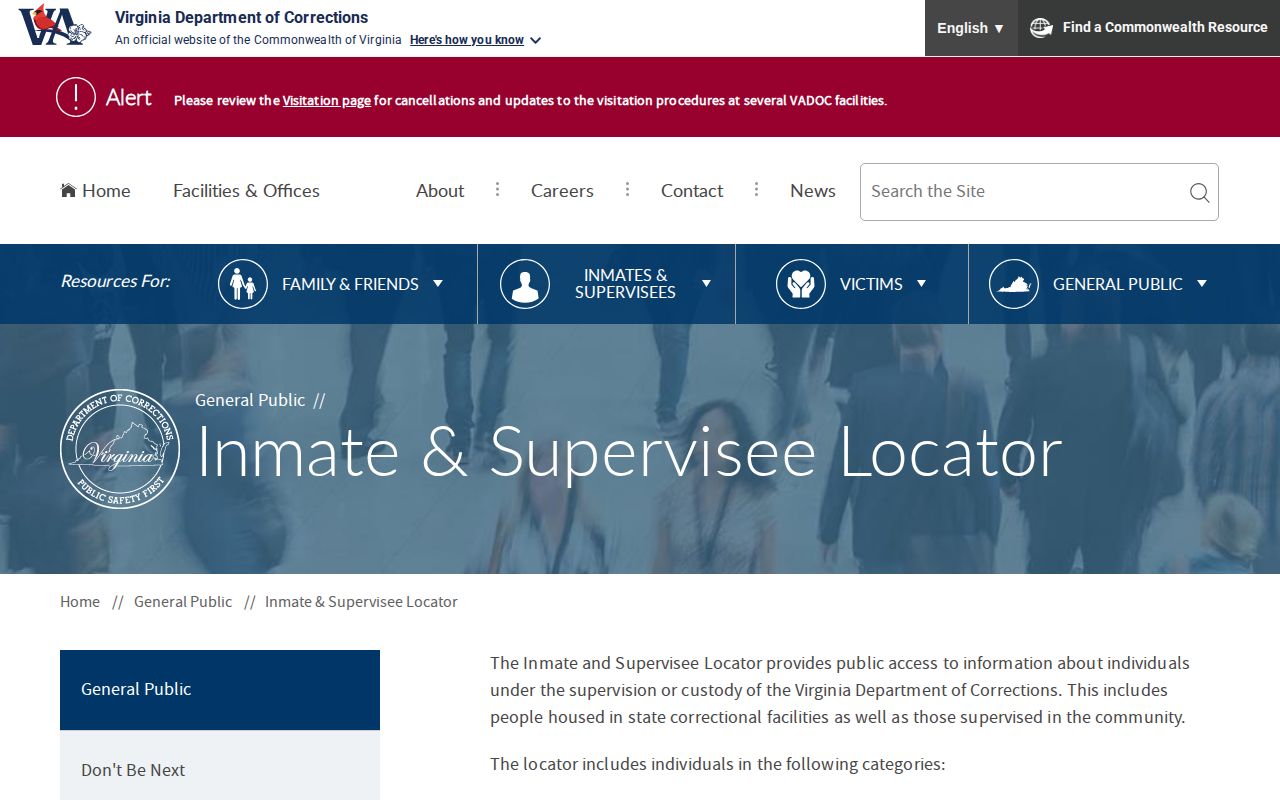
The displayed status, facility, and date field should be saved with the search date. A no-result can reflect a spelling issue, another custodian, data limits, or the absence of an active public state record.
Virginia Release Credit Systems
VADOC separates time computation into Good Conduct Allowance and Earned Sentence Credits. The controlling system depends on offense date, sentence type, and statutory eligibility. The imposed term alone is not enough. Calculation also requires jail credit, concurrent or consecutive terms, and any later amendment or forfeiture.
- Good Conduct Allowance, or GCA
- Applies to felony offenses committed before January 1, 1995 and misdemeanor offenses committed before July 1, 2008. When an active parole-eligible GCA sentence or combination exceeds 12 months, VADOC calculates parole eligibility, mandatory-parole release, and good-time release dates. Depending on class, GCA ranges from zero to 30 credit days for each 30 days served.
- Earned Sentence Credits, ESC-1
- Applies to offenses listed in Code § 53.1-202.3(A). The maximum is 4.5 credit days for each 30 days served.
- Earned Sentence Credits, ESC-2
- Applies to other eligible offenses under § 53.1-202.3(B). Level I earns 15 days per 30 served, Level II earns 7.5, Level III earns 3.5, and Level IV earns zero.
Classification is reviewed at least once each year. Institutional behavior, program participation, and cooperation can affect the level where the law permits. Credits may be forfeited and restored under Code § 53.1-189. They cannot shorten the period that must run before parole eligibility.
The VADOC time-computation page identifies GCA, ESC-1, ESC-2, and the variables used in the calculation.
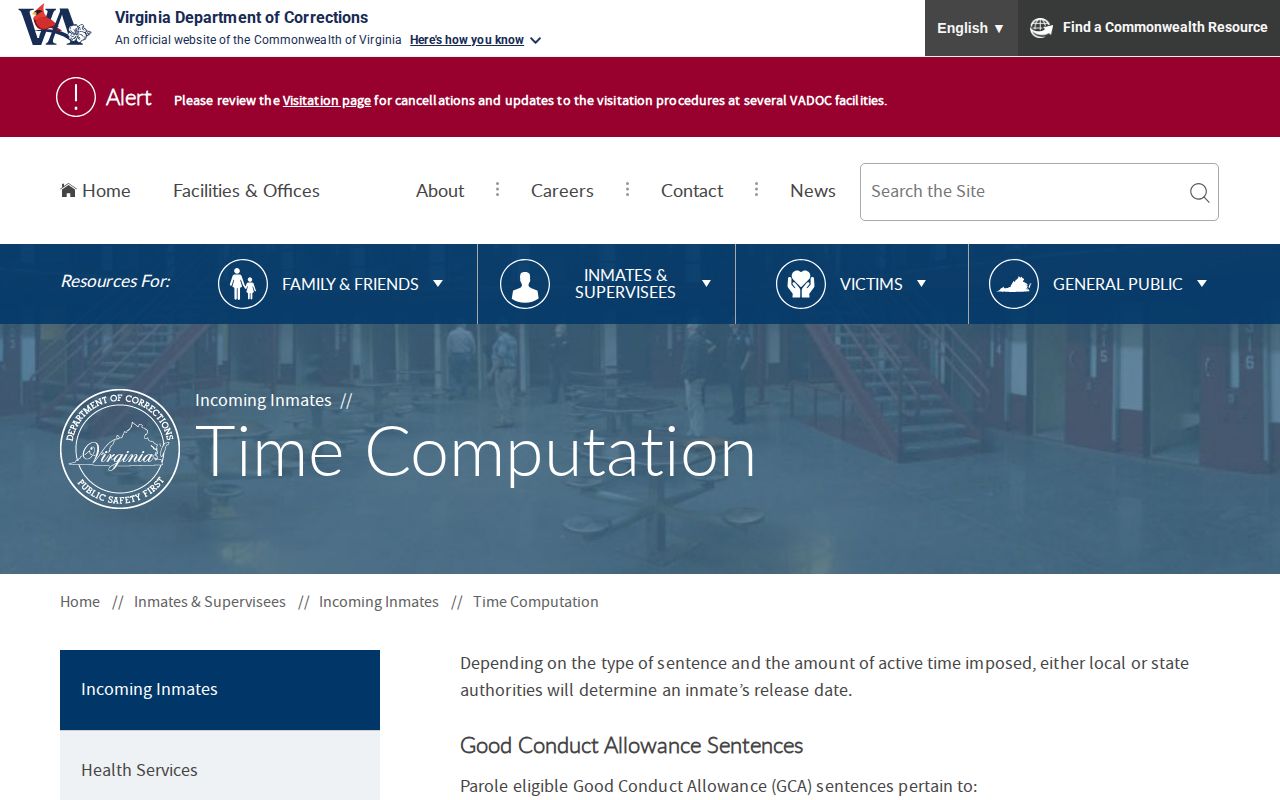
The official categories show why two people with the same imposed term can have different projected dates. The offense, offense date, credit class, conduct, and sentence structure all matter.
Clarke Release Date 85 Percent Rule
The common statement that a Virginia prisoner serves 85 percent is shorthand, not a universal calculator. Virginia abolished discretionary parole for most felony offenses committed on or after January 1, 1995 and adopted a sentence-credit framework. Under the restricted ESC-1 maximum, 4.5 days of credit for 30 actual days means those 30 days satisfy 34.5 sentence days. That is about 86.96 percent of the sentence, not exactly 85 percent.
Eligible ESC-2 offenses can earn at different rates. Older GCA sentences and parole-eligible terms use different rules. Some offenses are excluded, and transition provisions can apply. The statutes include § 53.1-198 for allowance classifications and § 53.1-202.3 for earned sentence credits. Use the current statutory text and VADOC calculation for the person’s case.
Virginia parole also remains relevant for older offenses and statutory exceptions. Section 53.1-165.1 generally removes ordinary parole for a felony committed on or after the 1995 cutoff, but current exceptions exist. Eligibility does not guarantee release, and a Board grant is not the exit timestamp.
Why Clarke Release Dates Move
A projected date changes when one of the facts or legal rules behind the calculation changes. Even a correct value can move after new data reaches VADOC. Ask which input changed rather than treating each update as an error.
| Factor | Effect on the date |
|---|---|
| Jail credit | Corrected credit for prior confinement can move the calculation earlier or later. |
| Credit class | GCA, ESC-1, and ESC-2 use different rates and eligibility rules. |
| Conduct and participation | Forfeiture, restoration, or an ESC level review can change earned credit. |
| Court amendment | A revised judgment or credit order changes the controlling sentence data. |
| Sentence structure | Concurrent terms run together; consecutive terms run one after another. |
| Parole action | A grant, denial, deferral, or rescission changes the parole path, but not necessarily the computed sentence end. |
| Detainer or new case | The first custody may end while another authority takes the person. |
VADOC also warns that applicable laws can lead to sentence recalculation. Date every saved result. When the locator and court order disagree, request the time-computation record instead of choosing the earlier value.
Confirm Clarke Actual Release Dates
VADOC says facility release occurs by 11:59 p.m. on the assigned date, weather permitting. The person reads or is read the applicable Order of Release, Conditions of Probation, or Conditions of Parole. The person signs, and a staff witness signs and dates the papers. Records staff address pending actions and property-envelope receipts, while property staff return possessions.
Transportation may be arranged. Unless the person is meeting a detainer, the business office returns the offender-pay balance and raises a balance below $25 to $25. A detainer changes the meaning of the event because another authority may receive custody. The person has left VADOC, yet may not be free in the community.
The official VADOC facility-release process describes the signed papers, property, funds, and detainer check.
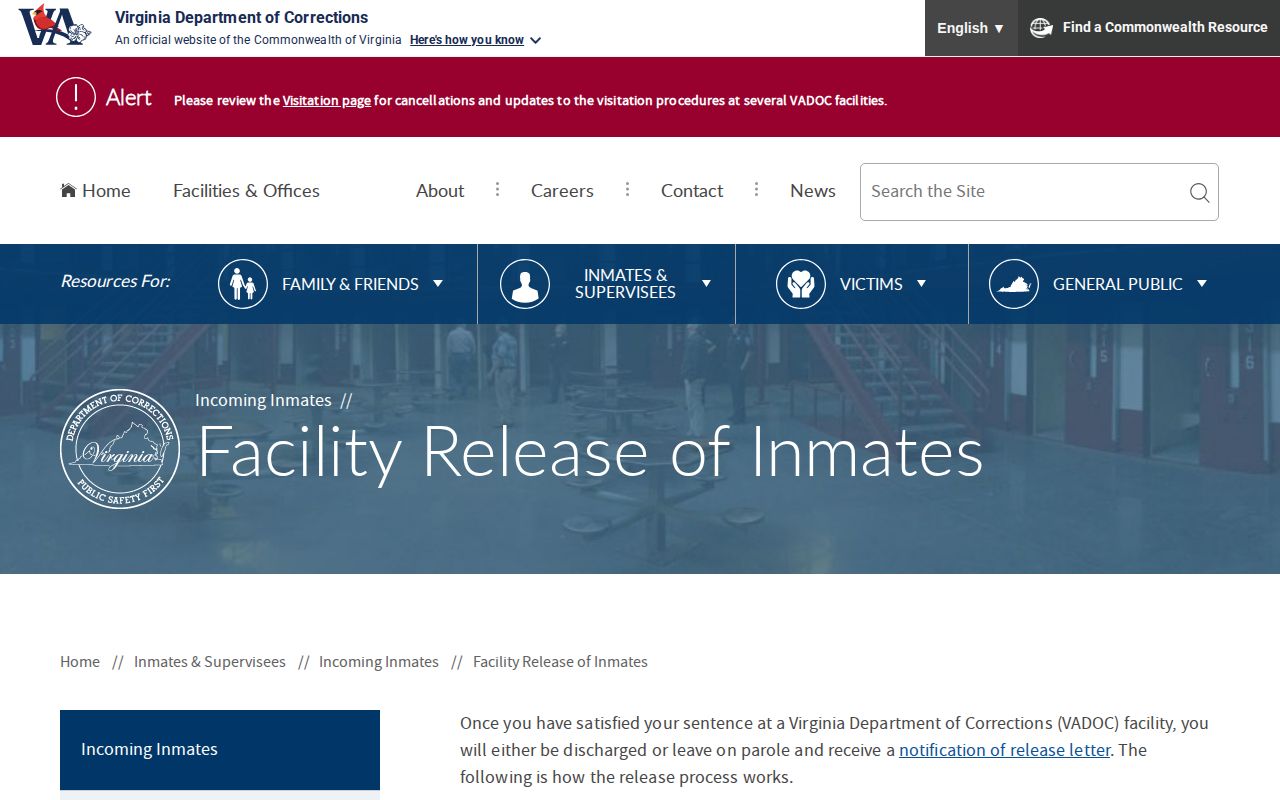
Those dated agency documents and the resulting status are completed-event evidence. They are stronger than a projected value copied before release day.
Note: Record both the VADOC exit and the receiving authority when a detainer turns release into transfer.
Clarke Home Monitoring Release Status
NRADC home electronic monitoring is an intermediate community-corrections status authorized under Virginia Code § 53.1-131.2 for qualifying people. It is not a synonym for final discharge. Someone may be physically outside the jail while remaining subject to location, reporting, equipment, and other program controls. This makes a roster check alone a poor way to describe legal status.
Verify home electronic monitoring through NRADC Community Corrections and the court order. The court establishes the authority and conditions; the program can address current participation. If the person later enters local probation or VADOC supervision, identify that new status separately. Do not use a projected end date for monitoring as proof that every duty ended.
Request Clarke Release Date Records
For a VADOC calculation, request the time-computation record with the DOC ID, sentencing court, case number, offense dates, imposed terms, and jail-credit information. Direct correspondence to the VADOC Correspondence Unit or Court & Legal Section at P.O. Box 26963, Richmond, VA 23261. VADOC also publishes 804-674-3000 and docmail@vadoc.virginia.gov for general contact.
For NRADC, ask for the existing admission and release entry, release type or authority, destination if recorded, and code legend. The Clarke clerk is the source for the judgment, jail-credit order, and later amendment. Request only the fields needed, seek electronic delivery, and ask for a cost estimate. The full Clarke County released inmate search explains how those records fit with court, VINE, and federal checks.
Track Clarke Release Date Events
Virginia VINE can provide local or regional jail custody-event alerts when the participating agency offers the event. State-prison victim notices use NAAVI, a separate VADOC service for eligible registered victims. The two systems do not share registrations. General state status remains in the public VADOC locator.
Notifications support awareness but do not replace a certified record. Preserve the reporting agency and event date. For a local-jail alert, confirm with NRADC and the Clarke court. For a state event, use VADOC status and release papers. The VINE Inmate Check covers specific-person search and alert registration.
What if the date passes with no released status? Check for recalculation, another sentence, a detainer, delayed data, or transfer. Ask the current custodian rather than assuming the projected event occurred.